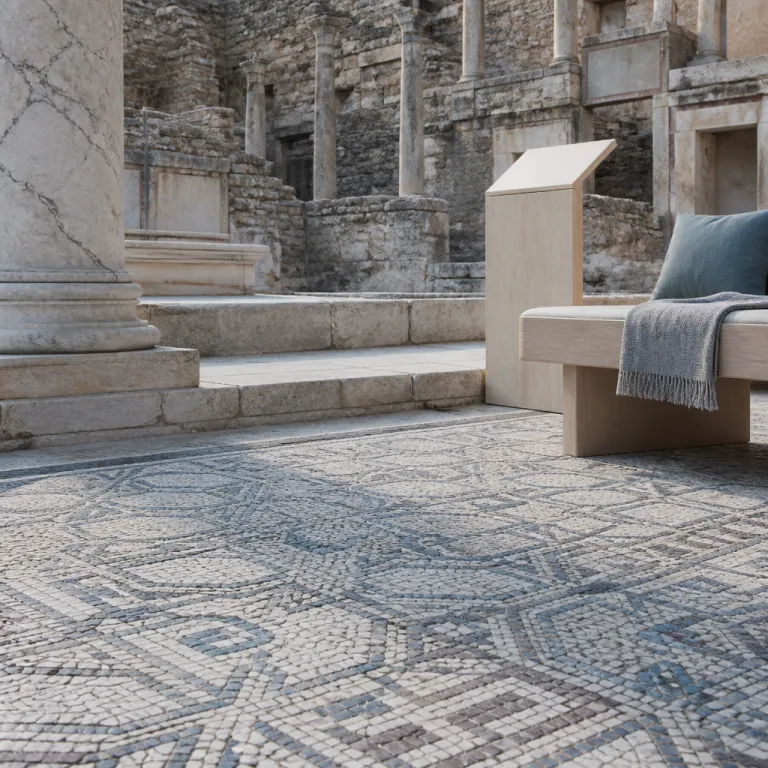
Terrace houses Ephesus as a blueprint for modern luxury stays
Terrace houses Ephesus form a rare window into ancient privilege. In the heart of the ancient city of Ephesus, these stepped residences rise above Curetes Street like a Roman hillside quarter, and they quietly set the standard for how we understand comfort in western Turkey today. For travellers choosing a luxury hotel in the wider Ephesus Kusadasi region, the way these houses were planned still feels surprisingly relevant.
The complex known as the terrace houses was inhabited century after century, from the Roman Imperial period until late antiquity. Archaeologists have identified six main residential units, each house layered on the slope like a private urban resort, with mosaics, frescoes, and heated rooms that rival many premium suites. Excavations began in 1961 under the Austrian Archaeological Institute, and when you walk through the Ephesus terrace complex today, you are effectively touring the design DNA behind many contemporary high end hotels in western Turkey.
Wealthy Ephesians once lived here with a level of privacy and service that modern guests will recognise. Each terrace house had a grand entrance from Curetes Street, then a sequence of rooms arranged around a central courtyard, with a dining room, reception spaces, and more intimate family areas. One guide likes to point out a tiny footprint preserved in a patch of plaster near a doorway, a reminder that behind all this splendour lived real families whose routines were not so different from our own. For travellers who visit Ephesus before checking into a luxury property in Kusadasi or Izmir, this contrast between ancient domestic life and your modern hotel stay can deepen your sense of place.
From Roman villas to premium suites: what the terrace houses reveal
Walking through the protected area of the terrace houses Ephesus, you move along raised platforms above exquisitely preserved floors. Under the modern roofing that echoes Roman structures, you see how each house used its terrace to frame views across the city and towards the harbour of ancient Ephesus. This careful staging of outlook and light is exactly what discerning guests now expect from sea facing suites in Kusadasi or from panoramic cave rooms in a luxury hotel in Cappadocia.
Inside every house, the sequence of rooms feels surprisingly familiar to anyone who values thoughtful hotel design. You pass from a shaded entrance into a reception hall, then into a formal dining room where frescoed walls once framed elite banquets, and finally into more private rooms that functioned like a Roman spa and bedroom wing. Heated floors, intricate mosaics, and carefully channelled light show that the residents of houses Ephesus were as sensitive to ambience as today’s luxury travellers. One of the most striking mosaics, often called the “Parrot and Mask” panel and widely discussed in Ephesus guidebooks, still glows with tiny coloured stones that catch the light much like a carefully lit lobby artwork.
For guests planning private tours with a specialist travel guide, the terrace houses Ephesus complex is where the story of Roman domestic luxury becomes tangible. Guides often explain how Roman architects used the slope to stack each terrace house, creating a vertical neighbourhood that still feels like a premium hillside resort. When you later compare this to your own hotel’s layout in Kusadasi or Izmir, the parallels between ancient rooms and modern suites become impossible to ignore.
Planning a refined visit to Ephesus from Kusadasi and beyond
Most luxury travellers reach Ephesus from Kusadasi, Izmir, or from yachts cruising the Aegean coast of western Turkey. The drive from Kusadasi to the entrance of the ancient city usually takes less than an hour, and many high end hotels arrange private transfers that include a dedicated guide. For guests who value time and comfort, combining Ephesus Kusadasi transfers with pre booked entrance tickets to the terrace houses area is the most seamless option.
When you visit Ephesus, you enter through the Magnesia Gate or the lower gate near the ancient harbour street. From there, curated tours typically lead you past the theatre Ephesus, the Library of Celsus, and the marble lined Curetes Street before reaching the separate entrance to the terrace houses Ephesus complex. Because this section is covered and climate controlled, it offers a welcome pause from the heat, much like stepping into a cool lobby lounge at a premium resort after exploring the city. As of 2024, the site generally opens in the morning and closes around sunset, with last entry to the terrace houses usually set earlier than the main gate; current hours and seasonal variations are published by the Turkish Ministry of Culture and Tourism and should always be checked shortly before your visit.
Travellers who enjoy multi stop itineraries often pair a day at ancient Ephesus with a longer stay inland. Many combine the Aegean coast with a luxury escape in Cappadocia, using resources such as a detailed guide to where to stay in Cappadocia for an unforgettable luxury escape. Whether you base yourself in Kusadasi, Izmir, or Cappadocia, arranging a private tour with a knowledgeable travel guide ensures that the terrace houses, the theatre Ephesus, and the wider archaeological area feel like a coherent, curated experience.
Spiritual and cultural layers: from the house of the Virgin Mary to the Temple of Artemis
The wider Ephesus area offers more than Roman urban life, and luxury travellers often weave spiritual sites into their itineraries. A short drive into the hills above the city brings you to the House of the Virgin Mary, sometimes called the House of Mary Ephesus, a modest stone dwelling revered by many Christian visitors. Pilgrims and culturally curious guests alike appreciate how this quiet house contrasts with the grand scale of ancient Ephesus below.
Nearby, the remains of the Temple of Artemis, once one of the Seven Wonders, add another layer to your understanding of western Turkey. While only a few columns of the temple survive, a well briefed guide can help you imagine the original sanctuary that once drew worshippers from across the ancient world, including wealthy Ephesians who later built the terrace houses. Many private tours combine the terrace houses Ephesus, the Temple of Artemis, and the House of the Virgin Mary into a single, carefully paced day.
Within the city itself, early Christian heritage appears in the Basilica of Saint John and in later chapels that overlay the Roman street grid. As you move between the basilica, the theatre Ephesus, and the Ephesus Museum in nearby Selçuk, you see how faith, commerce, and domestic life intersected over many centuries. For travellers staying in premium hotels that emphasise cultural immersion, this blend of temple, basilica, and house offers a rich narrative that extends far beyond a standard archaeological tour.
How terrace houses Ephesus inspire today’s luxury hotel design in Turkey
Many of Turkey’s most sophisticated hoteliers quietly study ancient Ephesus when designing new properties. The way each terrace house uses its slope, its private courtyard, and its sequence of rooms has become a reference point for architects working on hillside resorts along the Aegean and Mediterranean coasts. In the terrace houses Ephesus complex, you can almost read a manual for how to stage views, manage light, and separate public and private zones.
Roman architects created layered spaces where guests moved from a formal entrance into semi public reception rooms, then into intimate family quarters and service corridors. This choreography now appears in many luxury hotels, where lobbies, lounges, and spa areas echo the flow from street to courtyard to dining room in the houses Ephesus. The protective roofing installed above the Ephesus terrace complex, completed in stages from the early 2000s with support from the Austrian Archaeological Institute and Turkish partners, also mirrors how contemporary resorts use pergolas and canopies to soften the Aegean sun.
For travellers interested in design, arranging private tours with an architectural focus can be particularly rewarding. A specialist travel guide can show how features such as the Trajan Fountain, the Hadrian Temple, and the theatre Ephesus relate to domestic life in the terrace houses, then connect these ideas to your own hotel’s layout. Analyses of why Turkey’s hotels are redesigning for longer stays underline how ancient principles of comfort and flow still shape modern hospitality.
Practical guidance for a seamless, high end visit to the terrace houses
To experience the terrace houses Ephesus comfortably, timing and logistics matter as much as historical interest. Arrive early in the day, ideally at opening time, to enjoy the ancient city with softer light and fewer group tours on the main streets. Wear comfortable shoes, carry water, and remember that the stepped layout of the houses Ephesus requires some uphill walking on metal platforms.
The terrace houses complex has a separate entrance fee in addition to the main ticket for ancient Ephesus, and this surcharge is well justified by the level of preservation. Protective roofing, climate control, and ongoing conservation work funded by the Turkish Ministry of Culture and Tourism together with international sponsors keep the mosaics, frescoes, and rooms in remarkable condition. As one official explanation on site puts it, “Luxury Roman villas of wealthy Ephesians.”
Many premium hotels in Kusadasi and Izmir can arrange private transfers, skip the line entrance, and expert guides who tailor the tour to your interests. If you are fascinated by domestic life, ask your guide to focus on the dining room layouts, the heating systems, and the way each terrace house was inhabited century after century. Those intrigued by more unusual aspects of local lore sometimes extend their day to include lesser known spots such as the Grotto of the Seven Sleepers near Ephesus, combining archaeology, legend, and modern comfort in a single curated itinerary.
Key figures behind the terrace houses of Ephesus
- The terrace houses complex contains six main residential units, according to the official Ephesus guidebook, which makes it one of the most concentrated ensembles of elite Roman housing in western Turkey.
- The houses were inhabited for roughly 700 years, from the first century before Christ to the seventh century after Christ, illustrating a rare continuity of urban domestic life in ancient Ephesus.
- The site sits on the slope above Curetes Street in the city of Ephesus, at approximately 37.9394° north and 27.3411° east, forming a strategic position between the upper and lower parts of the city.
- Ongoing restoration, including the installation of large protective roofs, has significantly increased the number of visitors choosing to enter the terrace houses area, contributing to sustained tourism growth in the wider Ephesus Kusadasi region.
FAQ about terrace houses Ephesus and luxury travel
What exactly are the terrace houses in Ephesus ?
The terrace houses in Ephesus are a cluster of Roman era residences built on the slope above Curetes Street, occupied by wealthy Ephesians for several centuries. They feature mosaics, frescoes, underfloor heating, and carefully planned rooms that reveal how the urban elite of ancient Ephesus lived. For modern travellers, they offer a rare, indoor style archaeological experience that complements open air monuments such as the theatre Ephesus and the Library of Celsus.
How do I visit the terrace houses from Kusadasi ?
From Kusadasi, most visitors reach Ephesus by private transfer or organised tour, with a journey time of less than an hour. After entering the archaeological city, you follow the main route past the theatre Ephesus and down Curetes Street until you reach the signed entrance to the terrace houses complex. Many luxury hotels in Kusadasi can arrange a private guide and pre booked tickets so that your visit Ephesus experience remains smooth and unhurried.
Are the terrace houses suitable for travellers interested in luxury hotels ?
Yes, the terrace houses Ephesus are particularly compelling for travellers who care about design, comfort, and the history of hospitality. The way each terrace house uses its slope, its private courtyard, and its sequence of rooms closely parallels how many modern luxury hotels in western Turkey are planned. Visiting this area with an architectural travel guide can deepen your appreciation of both ancient Ephesus and your contemporary hotel stay.
What other sites should I combine with the terrace houses ?
Most curated tours combine the terrace houses with key monuments such as the theatre Ephesus, the Library of Celsus, the Temple of Artemis, and the Basilica of Saint John. Many travellers also visit the House of the Virgin Mary in the hills above the city, sometimes referred to as Mary Ephesus, to add a spiritual dimension to their day. If time allows, a stop at the Ephesus Museum in nearby Selçuk helps contextualise the statues, inscriptions, and objects once displayed in the houses Ephesus.
Do I need a guide to appreciate the terrace houses fully ?
While it is possible to walk through the terrace houses Ephesus independently, a knowledgeable guide can greatly enhance the experience. Expert guides explain how each room functioned, how the houses were inhabited century after century, and how features such as the Trajan Fountain and Hadrian Temple relate to domestic life. For travellers investing in a premium stay in western Turkey, a private tour represents a relatively small addition that yields a much richer understanding of ancient Ephesus.
Trusted references for further reading
- Turkish Ministry of Culture and Tourism
- Ephesus Archaeological Museum, Selçuk
- UNESCO World Heritage Centre – Ephesus