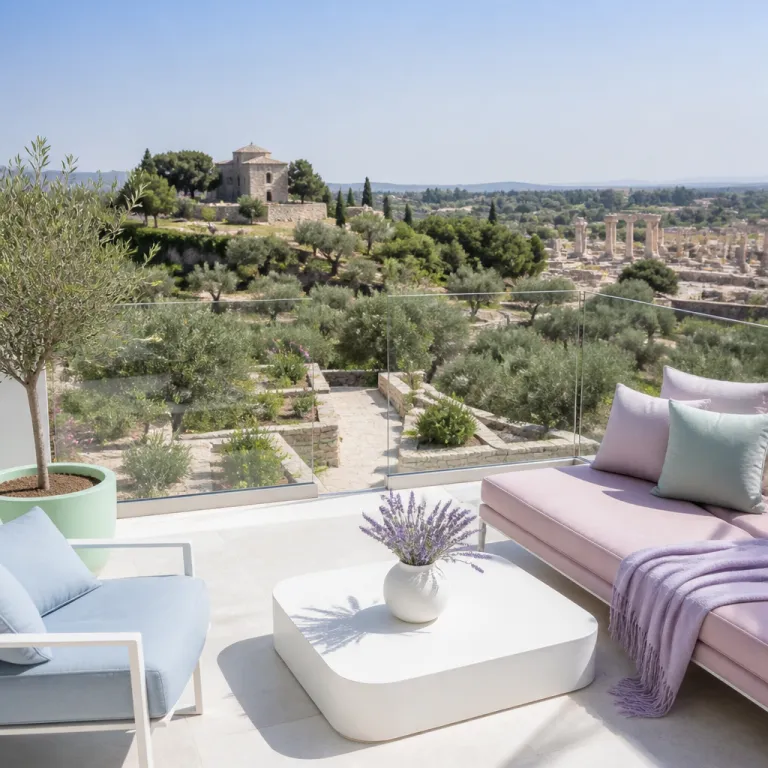
Why our lady of Ephesus belongs on a luxury Turkey itinerary
Our lady of Ephesus is not only a pilgrimage name; it is a quiet, elevated way to frame a stay that blends spiritual heritage with refined Turkish hospitality. In the hills above the ancient city of Ephesus, the modest stone house associated with Mary, Mother of Jesus, offers a rare sense of stillness that pairs beautifully with discreet premium hotels along the Aegean coast. For travellers who value privacy and depth of experience, this combination of sacred site and curated comfort can shape an unforgettable chapter in your travel life.
The city of Ephesus once stood as a major centre of early Christian life, and many Catholic visitors still speak of the area as a living page from the Acts of the Apostles. According to long-standing tradition, Mary lived in a simple house on Mount Koressos under the care of the apostle John, and this narrative continues to guide how the site is interpreted and protected. Luxury travellers who stay in nearby coastal resorts such as Kuşadası or Selçuk can usually reach the Ephesus house in under an hour by car, following signed routes through the hills, making it an easy day trip from a serene base on the Aegean.
Today the House of the Virgin Mary, known locally as Meryem Ana Evi, is recognised by the Vatican as a pilgrimage site, and official Turkish tourism sources describe it as one of the most visited Christian sanctuaries in the country. This recognition by the Catholic Church has encouraged a respectful atmosphere where guests from many faiths honour Mary as a mother figure and as a symbol of compassion. When you plan a premium stay around our lady of Ephesus, you are stepping into a landscape where faith, history, and attentive Turkish service coexist in a remarkably balanced way.
Staying near the House of the Virgin Mary in discreet coastal luxury
The House of the Virgin Mary, often called the Mary House, Meryem Ana Evi, or ana evi in Turkish, sits in the hills above Selçuk, while most luxury hotels cluster along the Kuşadası and Izmir coasts. This separation is an advantage for discerning guests, because you can enjoy a quiet sea-facing suite and visit the chapel and surrounding forest as a contemplative day trip. Many high-end properties now offer private transfers to the house at Ephesus, allowing you to arrive early in the day before the main tour groups and cruise excursions.
From a hospitality perspective, the key is to choose a house-style property or villa wing that mirrors the simplicity of the Ephesus house without sacrificing comfort. Look for suites with natural stone, local wood, and views that echo the hills where Mary, Mother of Jesus, is believed to have spent her final years of life. Some hotels arrange private guides who can explain how the early Christian community in Ephesus grew around the preaching of Paul and John, and how the nearby site of the ancient Basilica of Saint John connects with the tradition of our lady of Ephesus and the wider story of the early Church.
Travellers who enjoy slow itineraries often pair a stay near Ephesus with a thermal retreat inland, using routes similar to those described in a thermal itinerary for slow travellers in Pamukkale. This combination allows you to balance the spiritual focus of visiting the house at Ephesus with restorative spa days in mineral-rich waters and hammam rituals. When you return to the coast, an evening drink on your terrace can become a quiet moment to reflect on the chapel, the forest paths, and the sense of motherly protection many visitors associate with the Virgin Mary.
The story of Mary’s house at Ephesus and its Catholic heritage
For many Catholic and Orthodox guests, the appeal of our lady of Ephesus lies in the story behind the stone walls of the house on Mount Koressos. Christian tradition holds that Jesus entrusted Mary to the care of the apostle John, and that John later brought her to Ephesus to protect her life and support the early church community. This narrative is why the site is often described as the house of the Virgin Mary, or simply the house at Ephesus, in Catholic literature and devotional guides.
The modern identification of the Mary House is closely linked to the visions of the German mystic Anne Catherine Emmerich, sometimes written as Catherine Emmerich, whose descriptions of a small stone house in the hills near Ephesus inspired later searches. French figures such as Marie de Mandat-Grancey and the diplomat Auguste de Mandat-Grancey played roles in promoting these findings, which eventually drew the attention of the wider Catholic Church. Popes from Leo XIII to Benedict XVI, including visits by Pope Paul VI and Pope John Paul II in the twentieth century, have encouraged veneration of the site without issuing a formal dogmatic definition about the exact historical details.
For travellers, this layered history adds depth to a visit, especially when a knowledgeable guide explains how the Catholic Church distinguishes between private revelation and public doctrine. You will hear how the belief in the Assumption of Mary, Mother of God, into heaven shapes the way many pilgrims pray at the chapel and at the outdoor altars. A stay in a refined cave-style suite in Cappadocia, such as those highlighted in a guide to luxury cave hotels in Cappadocia, can be combined with Ephesus to create a wider journey through Turkey’s Christian and natural heritage.
Planning a refined visit to the chapel and grounds of our lady of Ephesus
When you plan a visit to the chapel of our lady of Ephesus, timing and pacing matter as much as hotel choice. The site opens in the morning, and arriving early in the day gives you a quieter experience of the house interior, the small church space, and the surrounding trees. Luxury travellers often arrange a private guide and driver, allowing them to move at their own rhythm and to pause at viewpoints over the Aegean coast or the ruins of ancient Ephesus.
The grounds include the stone house, now functioning as a chapel, a larger outdoor area for Catholic Mass, and fountains where visitors may collect water. Many pilgrims, including Catholic sisters and nuns, come on specific feast days in August for the Assumption and in other months such as November and February for private retreats. Even if you are not part of the Catholic Church, you may find the prayers addressed to the Blessed Virgin and the titles such as Mother of God and Virgin Mary to be moving expressions of trust in God.
Dress codes are modest but not restrictive, and respectful silence is encouraged inside the house Virgin Mary shrine. Photography is usually limited within the Mary House itself, which helps preserve a sense of reverence for Mary, Mother of Jesus, and for the many people who come seeking comfort. After your visit, returning to a calm suite with a view of the sea or the hills allows you to integrate the experience without rushing straight into busy city life.
Hidden gem stays and spiritual routes around Ephesus for discerning guests
The area around Ephesus offers more than large coastal resorts; it hides a network of small-scale luxury properties that feel like private houses rather than standard hotels. Some are set among olive groves and vineyards, echoing the rural setting of the original house at Ephesus where Mary and John are believed to have lived. These properties often work with local Catholic and Orthodox communities to arrange visits not only to the main chapel, but also to lesser-known churches and ruins scattered through the hills and valleys.
Travellers interested in the wider Christian story can follow routes that link the Ephesus house with the remains of early church buildings, including the site associated with the preaching of Paul and the memory of John the Evangelist. Guides sometimes explain how the title Our Lady of Ephesus reflects Mary’s role as a spiritual mother for the first Christian sisters and brothers who gathered in these communities. In this context, the presence of modern Catholic sisters and nuns at the shrine becomes a living continuation of that early church life rather than a distant echo.
For couples or solo guests seeking deeper rest, a curated wellness weekend that includes time at the sanctuary of our lady of Ephesus can be arranged through specialised agencies and premium booking platforms. Many of these itineraries combine gentle hikes near the ana evi, reflective time in the chapel, and spa treatments back at the hotel, similar in spirit to a couples wellness weekend in Turkey. The result is a journey where the story of Mary, Mother of God, the quiet of the hills, and the attentive care of Turkish hosts all support a more balanced inner life.
Practical tips, seasonal nuances, and lesser known connections
Seasonality shapes the atmosphere at the sanctuary of our lady of Ephesus, and your choice of travel month will influence both crowds and hotel rates. High season around major Catholic feast days, especially the Assumption in mid-August, brings larger groups and a more festive mood, while quieter months such as November and February offer a gentler pace. Luxury travellers often prefer shoulder seasons, when the weather is mild, the chapel is less crowded, and premium suites along the coast are easier to secure.
Although the shrine is firmly rooted in the landscape of Turkey, its story has reached far beyond Ephesus, inspiring churches dedicated to Our Lady of Ephesus in places as distant as Jamaica and Vermont. These international links underline how the figure of Mary, Mother of Jesus, honoured as the Blessed Virgin and Mother of God, speaks across cultures and continents. When you stand in the simple house at Ephesus, you are connected not only to the early Christian community of John and Paul, but also to a worldwide network of Catholic and Orthodox devotion.
Visitors sometimes ask about the role of popes such as Leo XIII, Benedict XVI, and John Paul II in recognising the site, and about how the Catholic Church evaluates the visions of Anne Catherine Emmerich. Local guides explain that while private revelations like those of Catherine Emmerich and the advocacy of figures such as Marie de Mandat-Grancey and Auguste de Mandat-Grancey helped bring attention to the house Ephesus, official recognition focuses on the site’s value as a place of prayer rather than on strict historical proof. As one explanation often cited on site puts it, “Yes, it's a recognized pilgrimage site,” and “It's where Mary and Apostle John lived; site of early Church councils,” summarising how faith and history are held together here.
Key figures and statistics about our lady of Ephesus
- The House of the Virgin Mary near Ephesus is described by the Turkish Ministry of Culture and Tourism as one of the most visited Christian sites in modern-day Turkey, welcoming large numbers of pilgrims and cultural travellers each year.
- Driving time from major luxury hotel zones such as Kuşadası to the Ephesus house is typically around 30 to 45 minutes in normal traffic, which allows guests to visit the chapel comfortably as a half-day excursion with time for quiet prayer.
- The sanctuary stands on Mount Koressos at approximately 6 to 7 kilometres from the archaeological site of ancient Ephesus, so many travellers combine both visits in a single day with a private guide and driver who can manage timing.
- Visitor numbers tend to peak around major Catholic feast days linked to Mary, Mother of God, especially mid-August, while the months of November and February usually see noticeably lower daily counts and a calmer atmosphere on the grounds.
FAQ about our lady of Ephesus and luxury stays nearby
Is the House of the Virgin Mary near Ephesus officially recognised by the Vatican ?
Yes, the House of the Virgin Mary near Ephesus is recognised by the Vatican as a pilgrimage site, which means Catholic pilgrims are encouraged to visit and pray there, even though the Church does not issue a definitive historical judgment about every detail of the tradition.
Why is Ephesus important for Christian travellers planning a luxury trip in Turkey ?
Ephesus is significant because early Christian tradition holds that Mary, Mother of Jesus, lived there under the care of the apostle John, and the city also hosted major church councils that shaped Catholic and Orthodox doctrine, so a visit combines archaeological interest with living spiritual heritage.
How can I combine a stay at a premium hotel with a visit to our lady of Ephesus ?
The most comfortable option is to base yourself in a luxury property along the Aegean coast, such as in Kuşadası or Izmir, and arrange a private car and guide through your hotel concierge to visit the house at Ephesus as a morning or afternoon excursion.
Do I need to be Catholic to appreciate the sanctuary of our lady of Ephesus ?
You do not need to be Catholic to visit or to find meaning in the site, because the atmosphere is welcoming to people of all faiths and none, and many guests simply appreciate the quiet of the chapel, the forest setting, and the story of a mother figure honoured for her courage and trust in God.
What should I wear and how long should I plan for the visit ?
Modest clothing that covers shoulders and knees is recommended out of respect for the religious character of the site, and most travellers find that two to three hours are enough to see the house, light a candle, walk the grounds, and spend some time in silent reflection before returning to their hotel.