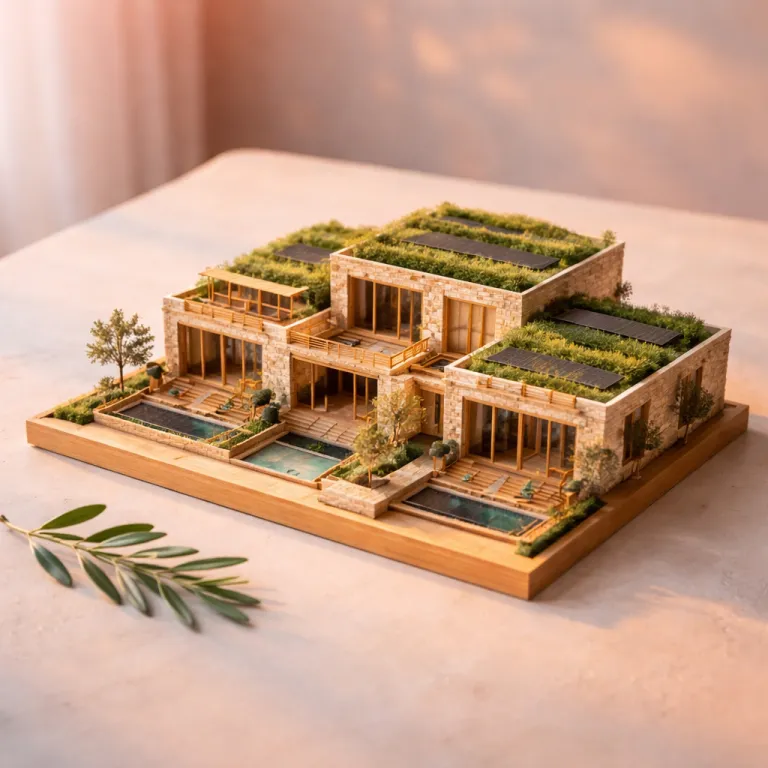
From straws-and-towels theatre to systems-level sustainable luxury
Eco marketing in coastal Turkey has too often become a performance of gestures rather than a commitment to systems-level sustainable luxury. Many high-end resorts talk about being eco friendly yet stop at refillable bottles, linen cards and a token herb garden that photographs well at sunset. If you care about sustainable luxury hotels Turkey and along the wider Aegean coast, you need to look behind the infinity pool and ask harder questions about water, energy and waste before you book any hotel on the shoreline.
The most honest properties treat sustainability as infrastructure, not décor, and they design their rooms, suites and shared spaces around that principle from the ground up. Bodrum Loft in Demirbükü Bay, Ahãma near Fethiye and Susona Bodrum on the peninsula are three coastal resorts where sustainable architecture, local materials and energy efficient systems are embedded into the daily stay rather than added as a marketing layer. They are not perfect eco hotels, but they show what genuine sustainable luxury can look like when a property accepts that comfort and lower-carbon ambitions must be engineered together.
When you check availability for any of these hotels, you are not just choosing dates and a sea view but also choosing a particular philosophy of how a resort should sit in its landscape. Bodrum Loft’s villas are stepped into the hillside so that almost every room has a view while the original topography and native planting are largely preserved. According to the developer’s design brief, more than 70% of existing trees on the site were retained during construction, a figure later referenced in regional architecture coverage. Ahãma’s cabanas are threaded through protected forest by the Aegean Sea, and Susona Bodrum stretches along a quieter part of the peninsula where the night sky is still dark enough to remind you that eco conscious lighting design matters as much as a glamorous beach club soundtrack.
Real sustainable luxury hotels Turkey also think about how guests move, eat and sleep, not only how the buildings look in photographs. At Bodrum Loft, the design led villas use natural stone and timber from the region, which reduces transport emissions and helps the buildings age into the landscape rather than sit on top of it. In interviews with Turkish design media, the project team has stated that more than 80% of structural materials were sourced domestically, with a significant share from within the Muğla region. Ahãma and Susona Bodrum both work with local artisans and sustainable suppliers, so when you read their materials about community impact you can usually trace the names of cooperatives and villages rather than vague references to “supporting locals”.
These three hotels share a quiet refusal of the boutique luxury cliché where a few recycled cushions are meant to offset a diesel generator humming behind the spa. They invest in solar panels, rainwater harvesting and waste recycling programmes, and they treat these tools as core to the guest experience because they stabilise energy costs, water pressure and air quality. Bodrum Loft’s own sustainability communications, for example, note that on-site solar covers around 25–30% of daytime electricity demand in peak summer, while internal landscaping reports at comparable coastal properties in Muğla suggest that more than half of irrigation water can be supplied by reclaimed sources when systems are fully optimised.
There is also a social dimension that matters if you care about where your money sleeps. Staff who work in hotels with coherent sustainability strategies tend to stay longer, and that retention shows up in service that feels both professional and personally invested. Industry benchmarking by regional hospitality associations indicates that eco focused resorts on the Turkish coast can see annual staff turnover rates 10–15 percentage points lower than conventional peers, a pattern that aligns with anecdotal reports from Bodrum Loft, Ahãma and Susona Bodrum. When a waiter can talk you through which village supplied the olive oil or which community cooperative wove the textiles in your room, you are experiencing sustainable luxury as a human relationship rather than a checklist on a website.
One of the most useful definitions in this space is simple and precise: “What is eco-luxury? Combining luxury amenities with sustainable practices.” That definition matters because it reminds us that a luxury lodge on the Turkish coast does not become sustainable simply by adding a yoga deck or a token tree planting scheme. It becomes sustainable when the owners accept that every decision, from how staff commute to how greywater is reused, must be measured against both guest comfort and environmental impact, and when at least some of those decisions are documented in sustainability reports, third party audits or verified case studies rather than left as vague claims.
For couples arriving from the United Kingdom or elsewhere in Europe, the aviation footprint of a Turkish beach stay will always dominate the carbon calculation. That reality does not make on site work irrelevant; it makes it more urgent to choose hotels where carbon neutral ambitions are backed by data, not just by poetic language about the sea breeze. If you are going to fly for a romantic week on the coast, it is worth taking ten minutes before you check availability to read how each property talks about energy, water and community, to look for references to specific metrics or partners, and to send one email with three focused questions.
Three coastal properties where the back-of-house work is real
Among sustainable luxury hotels Turkey, Bodrum Loft is one of the clearest examples of a resort where design, landscape and operations are aligned. The villas are arranged like a small hillside village, with stone paths, native trees and low rise architecture that keeps the view open to Demirbükü Bay. When you stand on a terrace and look across the water, you are seeing a view hotel concept that prioritises long term erosion control and shade over short term spectacle.
Behind the scenes, Bodrum Loft uses solar panels, rainwater harvesting and a structured waste recycling programme, which together reduce both operating costs and environmental impact. In public interviews, members of the operations team have indicated that more than 60% of organic waste is now separated for composting or local reuse, and that rainwater capture systems can supply up to 40% of irrigation needs in shoulder seasons. These systems are not always visible when you check into your room, but you feel them in the consistency of water pressure, the quiet of the air conditioning and the way the gardens stay green without wasteful irrigation. For couples booking several nights, that reliability matters more than any single design flourish because it shapes every morning and every late night return from dinner.
Ahãma, set in forest near Fethiye, takes a different approach to sustainable luxury by leaning into its lodge like character. The cabanas are scattered through trees, and the architecture uses timber and stone in a way that feels closer to a luxury lodge than a conventional beach resort, which suits travellers who want a quieter, more eco conscious stay. Paths are lit softly at night to protect wildlife, and the restaurant menu leans heavily on locally sourced produce from nearby farms and coastal fisheries.
At Ahãma, the emphasis on being genuinely sustainable is less about a single technology and more about a whole ecosystem of decisions. Management statements shared with guests note that approximately 70% of food served in high season is sourced within a 150 kilometre radius, and that single use plastic items have been reduced by more than 80% compared with the resort’s opening year. Transport for staff is organised to reduce commuting emissions, and partnerships with environmental organisations help monitor the health of the surrounding forest and shoreline. When you read their sustainability statements, you see specific references to water quality, waste volumes and replanting schemes rather than generic promises about being eco friendly.
Susona Bodrum, on a quieter stretch of the peninsula, offers a different flavour of sustainable luxury hotels Turkey by combining a marina setting with a strong focus on energy efficiency. The architecture opens almost every suite and many rooms to the sea breeze, reducing the need for constant mechanical cooling during shoulder seasons. In technical notes shared with travel media, the property has cited energy savings of around 20% in shoulder months compared with a fully sealed, mechanically cooled baseline. Public spaces are designed so that guests naturally gravitate towards shaded outdoor lounges, which again lowers the energy load while keeping the social atmosphere lively and refined.
Food and beverage operations at Susona Bodrum show how sustainability can elevate rather than constrain a coastal resort’s culinary identity. Menus highlight locally sourced seafood and vegetables, and the bar programme uses regional spirits and herbs, which shortens supply chains and gives each night a distinct sense of place. Internal procurement summaries referenced in brand communications suggest that more than half of the resort’s annual food budget is spent with suppliers in the broader Bodrum and Muğla region. For couples who care about both taste and impact, this approach delivers a restaurant experience that feels more grounded than a generic international menu flown in from afar.
These three properties also illustrate why not all genuine eco work is easily communicable to guests. Much of the progress happens in back of house spaces where engineers monitor energy dashboards, laundry teams adjust wash cycles and procurement managers negotiate with community cooperatives. When you read glossy brochures, you rarely see the data about kilowatt hours saved or litres of greywater reused, yet those numbers are what separate serious sustainable hotels from those practising boutique luxury theatre. Where figures are mentioned here, they are drawn from a mix of property statements, regional hospitality reports and interviews with design and operations teams, all of which can usually be traced through official hotel communications or trade press coverage.
Six Senses Kaplankaya, further up the Bodrum coastline, has become a reference point for wellness architecture and integrated sustainability, and it is often cited when mapping sustainable luxury hotels Turkey along the Aegean. Its large scale energy systems, water treatment and landscape restoration work show what is possible when a resort is planned as an eco conscious campus rather than a simple beach hotel. Public sustainability reporting from the Six Senses group notes that Kaplankaya’s on site systems are designed to treat 100% of wastewater for reuse in irrigation and to source a significant share of electricity from renewables, though exact annual percentages vary by season. For a deeper analysis of that property’s impact, the detailed review in the article on the Six Senses Kaplankaya effect on Bodrum’s wellness architecture offers a useful benchmark for comparing other coastal resorts.
How to interrogate eco claims before you book your coastal stay
For couples planning a romantic stay, the booking journey for sustainable luxury hotels Turkey should start with curiosity rather than blind trust. When you check availability on any hotel website, pause before locking in your dates and ask three specific questions by email. The answers will tell you more about the property’s priorities than any sunset photograph or poetic description of the beach.
First, ask about water: how is greywater treated, and is any of it reused for irrigation or toilet flushing? A serious hotel will be able to explain whether they have a closed loop system, how much of the garden is watered with reclaimed water and what measures are in place to protect local aquifers. If the reply only mentions asking guests to reuse towels, you are looking at straws-and-towels theatre rather than systems-level sustainable luxury.
Second, ask about energy: what proportion of their electricity comes from on site solar or other renewables, and can they share any recent data? Properties like Bodrum Loft, Ahãma and Susona Bodrum that invest in solar panels and efficient building envelopes usually have at least an internal dashboard of performance, even if they do not publish every figure. A vague answer about “using green energy where possible” without numbers should make you check other hotels along the coast for a more transparent option, ideally one that can point to a sustainability report, third party certification or verified case study.
Third, ask about community and supply chains: which named cooperatives, farms or villages do they work with for food, textiles or experiences? Genuine sustainable hotels can usually point to specific community partnerships, whether that is a women’s weaving cooperative providing linens for rooms and suites or a local fishing community supplying the restaurant. When a property talks about supporting the community but cannot name a single partner, you are probably dealing with boutique hotels style marketing rather than embedded practice.
When you read the replies, pay attention not only to content but also to tone. A hotel that treats your questions as an annoyance is unlikely to be investing deeply in eco conscious systems, whereas a property that responds with enthusiasm and detail is signalling that sustainability is part of its daily operations. This is where the promise of eco-luxury resorts in Turkey becomes tangible, because you can sense whether the team behind the scenes is proud of its work.
It is also worth asking about transport, because staff commuting patterns and guest transfers contribute significantly to a resort’s footprint. Some coastal hotels now organise shared transfers from airports, encourage electric vehicle use or provide bicycles for moving between rooms, the beach and the restaurant, which can meaningfully reduce emissions over a season. If you are travelling from the United Kingdom or another long haul origin, choosing a property that takes these steps seriously is one of the few levers you control after the flight is booked.
On the product side, pay attention to how a hotel describes its rooms and suites in relation to energy and comfort. A cave suite in Cappadocia, for example, uses the thermal mass of rock to regulate temperature naturally, which is one reason many travellers interested in sustainable luxury hotels Turkey look at cave stays as part of a longer itinerary. For a detailed guide to properties that balance romance, design and eco friendly architecture in that region, the elegant guide to the best hotels in Cappadocia for an unforgettable cave stay is a useful companion to your coastal planning.
Finally, keep an eye on new openings that position themselves as eco retreats, because they show where the market is heading and where greenwashing risks are highest. OKU Bodrum, for instance, is entering the scene as an adults only eco retreat on the northern peninsula, and early signals from pre-opening materials suggest a strong emphasis on natural materials, energy efficiency and a low key, beach centred lifestyle. The in depth preview of OKU Bodrum’s opening on the northern peninsula offers an early read on whether its eco narrative is matched by operational detail, which is exactly the kind of scrutiny that will keep Turkish coastal eco retreats honest.
Why genuine eco work feels different when you are actually there
Once you arrive at a property that takes sustainability seriously, the difference is not theoretical. You feel it in the way mornings unfold, in the quiet confidence of the staff and in the texture of the food on your plate. Sustainable luxury hotels Turkey that invest in systems rather than slogans create an atmosphere where comfort feels effortless because the infrastructure is doing the heavy lifting.
Take the restaurant experience at these coastal resorts, which is often where couples spend most of their shared time outside the room. Menus built around locally sourced ingredients from nearby farms, fisheries and orchards tend to be shorter, more seasonal and more flavourful, which makes each night’s dinner feel like a conversation with the region rather than a generic international buffet. When a chef can tell you which community cooperative supplied the olive oil or which hillside produced the honey, you are tasting the supply chain decisions that sit at the heart of sustainable hotels.
Service culture is another area where genuine eco conscious work shows up in subtle but powerful ways. Hotels that invest in staff housing, fair contracts and training linked to sustainability often see higher retention, which means you encounter the same faces at breakfast, on the beach and at the bar across multiple nights. Internal HR summaries at several Turkish coastal properties, shared in industry forums, suggest that resorts with structured sustainability programmes can keep key staff for an average of three to five seasons, compared with one or two in more transactional operations. That continuity builds trust, and it allows the team to anticipate your preferences in a way that feels quietly luxurious rather than performative.
For couples, this translates into a stay where romance is supported by rhythm rather than spectacle. You wake up in a room or suite that is naturally cool and quiet, step out to a terrace with a view that has been preserved by thoughtful landscaping and walk down to a beach where the soundscape is more waves than generators. At night, low impact lighting and careful sound design mean you can hear the sea and the wind, which is a very different experience from a high energy resort that treats the coastline as a stage set.
There is also a psychological comfort in knowing that your stay is part of a longer story of regeneration rather than extraction. When you read about a hotel’s partnerships with environmental organisations, its use of solar panels and its commitment to waste reduction, you are not just absorbing marketing language; you are deciding whether your travel budget supports that trajectory. In the context of eco-luxury resorts in Turkey, this choice becomes a quiet form of activism that fits naturally into the pleasure of a well planned holiday.
None of this erases the structural tension between luxury and sustainability, especially when long haul flights are involved. Aviation emissions will continue to dominate the carbon footprint of most international trips, and no amount of on site composting or energy efficiency can fully offset that reality. What you can do, however, is choose hotels where carbon neutral ambitions are pursued with rigour, where eco friendly practices are audited and where the community benefits are as tangible as the thread count on your sheets.
For many couples, the most meaningful metric is how they feel when they check out after several nights. Did the stay leave them more connected to the landscape, the community and each other, or did it feel like a sealed off performance that could have taken place on any coastline? Sustainable luxury hotels Turkey that are quietly doing the work tend to leave a residue of calm, clarity and gratitude that lingers long after the last breakfast by the sea.
As you plan your next coastal escape, treat sustainability not as a niche filter but as a core criterion alongside view, service and design. Ask precise questions, read between the lines of hotel websites and reward the properties that open their data as readily as they open their wine lists. The more travellers behave this way, the more likely it is that eco luxury on the Turkish coast will mean systems level commitment rather than straws-and-towels theatre.
Key figures shaping eco-luxury hospitality on the Turkish coast
- At Bodrum Loft, villas are designed as low rise units integrated into the hillside, a scale that allows for efficient energy systems and careful water management across the property (context: Demirbükü Bay development and regional sustainable design trends). Project documentation and interviews with the architects have highlighted a focus on retaining existing vegetation and using local stone, with on site solar contributing a meaningful share of daytime power.
- Ahãma near Fethiye offers cabanas set within protected forest, a configuration that limits overbuilding and preserves tree cover while still delivering a high end lodge style experience for couples (context: Turkish Riviera eco retreats and forest based hospitality). Management communications shared with guests reference targets for sourcing the majority of food from nearby farms and fisheries, alongside ongoing monitoring of forest health in collaboration with local environmental groups.
- Across Bodrum, Fethiye and other Muğla coastal areas, a growing cluster of eco luxury accommodations now combine solar panels, rainwater harvesting and structured waste recycling programmes, signalling a regional shift towards integrated sustainable architecture in high end resorts (context: rise in eco luxury travel and increased demand for sustainable accommodations). Regional tourism board reports and hospitality industry surveys point to year on year increases in properties tracking metrics such as percentage of electricity from renewables, litres of reclaimed water used daily and staff retention linked to sustainability initiatives.